


Botswana National Parks: Luxury Geography Guide
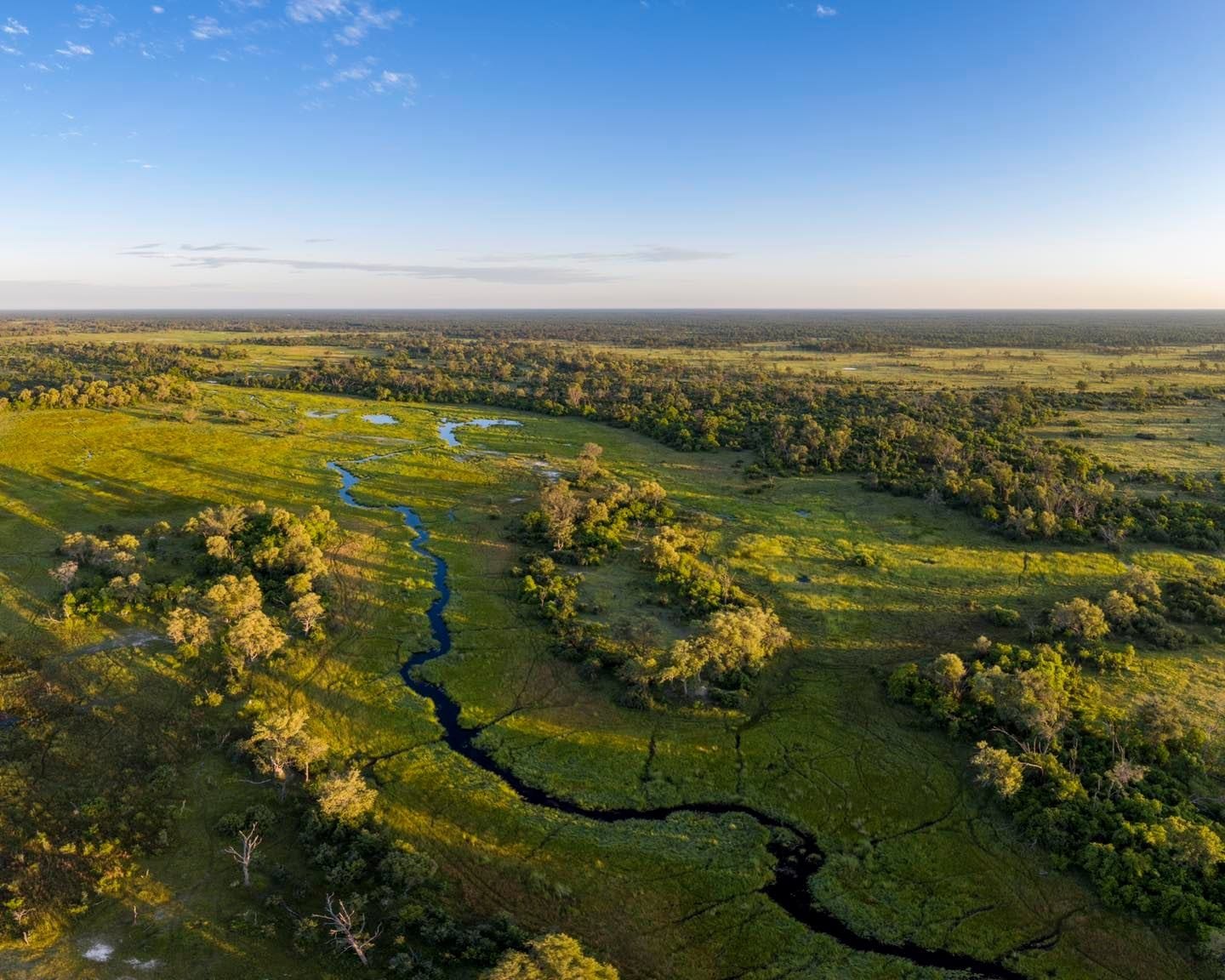
From a small plane lifting off from Maun, the change is hard to miss. Pale sand gives way to threads of silver, then to channels, lagoons and islands crowded with palms. Water that fell as rain in Angola months earlier has found its way into the heart of the Kalahari.
That meeting of water and sand is the key to understanding Botswana national parks. Follow it, and the country’s wild places begin to make sense, each one shaped by the same quiet question: how much water reaches it, and when.
Botswana’s main national parks and game reserves are Moremi, Chobe, the Central Kalahari, Makgadikgadi and Nxai Pan, and the Kgalagadi Transfrontier Park. Around 38 percent of the country is set aside for wildlife. The north is defined by permanent water and dense game; the centre and south by desert, salt pans and seasonal herds.
The Core Philosophy: Why Is Wilderness the Ultimate Luxury in Botswana?
Botswana made an early decision about the kind of safari destination it wanted to be. Close to 40 percent of its land is committed to wildlife, across national parks, game reserves and the wildlife management areas that connect them. Much of it is unfenced, so animals move with the rain and the grazing rather than with boundaries.
Tourism policy follows the same logic. Instead of building for volume, the country has favoured a high-value, low-impact model: fewer beds, larger areas and private concessions operated under strict conditions. The result is space.
That space carries a responsibility for everyone who operates within it. Camps in Botswana are increasingly judged by how lightly they sit on the land. At Atzaró Okavango, that commitment runs through an on-site solar farm, reverse-osmosis water purification, the removal of single-use plastic and our conservation partnerships with African Bush Camps and the African Bush Camps Foundation. Even the raised walkways through camp follow the same thinking.
“We are a guest in the Delta, not the other way around. That’s why the walkways are raised: the hippos were using these paths long before we arrived, and they still do.” — Kele Modiagane, Camp Manager, Atzaró Okavango
The Permanent Waters: Which Parks Define the Northern Sanctuaries?
The north of Botswana is where the water stays. The Okavango River crosses in from Namibia and fans out into the Delta, a UNESCO World Heritage Site since 2014. Further east, the Chobe and Linyanti river systems trace the country’s northern border.
Together they form a mosaic of floodplains, channels, riverine forest and islands that supportsthe highest concentrations of wildlife in the country.
Moremi Game Reserve
Moremi was established in 1963, and its origins set it apart. It was created by the BaTawana people on their own land, the first reserve of its kind in southern Africa. It covers much of the eastern Okavango and includes Chief’s Island, one of the largest land masses in the Delta and long regarded as one of its richest wildlife areas.
Moremi offers perhaps the clearest window into the Okavango Delta’s wetland ecosystem. Lagoons and permanent channels lie beside dry tongues of mopane and acacia woodland. Water-adapted antelope such as red lechwe share the landscape with elephant, buffalo, lion and leopard. The reserve is also one of the most important strongholds for African wild dogs, among the continent’s most endangered predators.
The rhythm here is set by the annual flood. Rain that falls in Angola between roughly November and March takes months to travel south, so the Delta is at its fullest in the middle of the southern winter, when the rest of the region is at its driest.
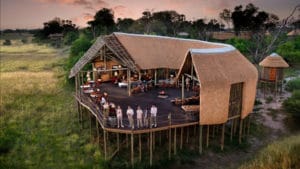
Atzaró Okavango Camp lies just beyond Moremi, in the NG/32 private concession between the reserve and the Gomoti Plains. Guests arrive by a 15-minute helicopter flight from Maun. Days are shaped around game drives, walking safaris and mokoro excursions through the channels, led by guides who were born and raised in the Delta. A private concession allows a different pace, one where the Delta can be explored on foot and by water as naturally as by vehicle.
Chobe National Park
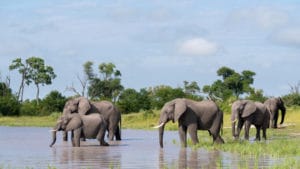
Chobe, in the north-east, was declared a national park in 1968 and is best known for its elephants. In the dry months, large herds gather along the Chobe River, and watching them cross at the water’s edge is one of the defining images of a Botswana safari.
The park is really several landscapes in one:
- The riverfront near Kasane is lush and busy, drawing elephant, buffalo and hippo. Boat safaris offer a lower, slower perspective.
- Savuti, to the south-west, is drier and more open, shaped by the Savuti Channel, which has flowed and dried in unpredictable cycles over the decades. The Linyanti Swamps, further west, form a quieter wetland frontier.
Chobe is also part of the Kavango–Zambezi Transfrontier Conservation Area (KAZA), which links protected areas across five countries. It is a reminder that the region’s elephants have never recognised borders.
Which Botswana National Parks Are Best for Desert Landscapes, Salt Pans, and Ancient Lakebeds?
Travel south from the Delta and the water disappears. What remains are traces of it: fossil river valleys, salt pans and the dry bed of a lake that once covered much of northern Botswana. These are the parks for travellers drawn to scale, silence and sky.
Central Kalahari Game Reserve
The Central Kalahari Game Reserve covers around 52,800 square kilometres. It is the largest reserve in southern Africa and is widely described as the second-largest game reserve in the world. It was established in 1961, originally as a sanctuary for the San, whose knowledge of the Kalahari remains remarkable.
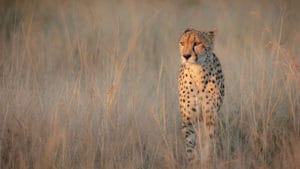
For much of the year the reserve feels close to empty. Then the summer rains arrive, usually between December and April, and the northern grasslands turn green. Deception Valley in particular draws springbok, gemsbok and wildebeest to graze. Predators follow, including the black-maned Kalahari lion, cheetah and brown hyena.
Makgadikgadi and Nxai Pan
The Makgadikgadi Pans are what remains of Lake Makgadikgadi, an ancient super-lake that dried up long ago. Today they form one of the largest salt pan systems in the world. In the dry season, the white crust runs to the horizon. It is a landscape of meerkats, brown hyenas and a quality of light that photographers travel a long way for.
When the rains come, the pans change entirely. Grass spreads across their edges, and large herds of zebra and wildebeest move in, one of the great wildlife movements of southern Africa.
Nxai Pan, to the north, follows the same seasonal rhythm. It is also home to Baines’ Baobabs, a group of ancient trees painted by the explorer Thomas Baines in 1862 and still standing much as he saw them.
Transfrontier Horizons: Where Do the Southwestern Dunes Begin?
Kgalagadi Transfrontier Park
In the far south-west, Botswana shares a single protected area with South Africa. The Kgalagadi Transfrontier Park joins Botswana’s Gemsbok National Park with South Africa’s Kalahari Gemsbok National Park. Together they cover around 38,000 square kilometres, managed as one ecosystem with no fence between them.
This is the red Kalahari: long parallel dunes and two dry riverbeds, the Nossob and the Auob, which flow only rarely. Wildlife concentrates along these valleys, from gemsbok and springbok to cheetah and black-maned lions.
Birds of prey are a particular highlight. Martial eagles, bateleurs and pale chanting goshawks are regularly seen.
The Botswana Ecosystem Matrix: How Do the Parks Compare?
| Park/Reserve | Landscape | Signatura Wildlife | Best Season | Best Suited To |
| Moremi Game Reserve | Lagoons, floodplains, islands | Wild dog, lion, leopard, elephant, red lechwe | Dry season (roughly May-October) | A classic Delta safari by land and water |
| Chobe National Park | Riverfront, Savuti, Linyanti Swamps | Elephant, buffalo, hippo, lion | Dry season (roughly May-October) | Large herds and river-based viewing |
| Central Kalahari Game Reserve | Grasslands, fossil valleys, pans | Black-maned lion, cheetah, gemsbok, springbok | Green season (roughly December-April) | Remote desert and solitude |
| Makgadikgadi & Nxai Pan | Salt plans, grassland, baobabs | Zebra, wildebeest, meerkat, brown hyena | Green season for the migration | Wide horizons and seasonal herds |
| Kgalagadi Transfrontier Park | Red dunes, dry riverbeds | Gemsbok, cheetah, lion, raptors | Year-round | Photographers and returning travellers |
Frequently Asked Questions
What are the main national parks and game reserves in Botswana?
The best-known national parks are Chobe, Makgadikgadi Pans, Nxai Pan and the Kgalagadi Transfrontier Park. The principal game reserves are Moremi, the Central Kalahari and Khutse. Most first-time visitors focus on the Okavango Delta and Chobe.
What is the difference between a national park and a game reserve in Botswana?
For visitors, the difference is largely administrative: both are protected and managed by the Department of Wildlife and National Parks. The more meaningful distinction is between public protected areas and private concessions, which receive fewer visitors and generally allow more flexible activities such as walking safaris.
When is the best time to visit Botswana’s national parks?
It depends on the region. In the north, the dry season (roughly May to October) concentrates wildlife around permanent water. In the Kalahari and the Makgadikgadi, the green season (roughly December to April) brings grazing herds and the predators that follow them.
Can you combine the Okavango Delta and Chobe in one trip?
Yes. The two are often combined, with light aircraft connecting the Delta and Chobe via Maun and Kasane. Our team can help plan your trip across both, pairing the quiet channels of the Delta with the riverfront herds of Chobe.
Botswana is best understood as one journey rather than a single park, from the Delta and the Chobe riverfront to the salt pans and red dunes of the south.
The north, where water and wildlife stay longest, is the natural place to begin, and on the edge of Moremi, Atzaró Okavango Camp is an unhurried place to start.
Ready to experience the Delta?


