


Safari Packing List: The Ultimate Luxury Clothing & Gear Guide
Every safari begins with the same small ritual. The bag lies open on the bed, the list is too long, and somewhere between the third jacket and the second pair of boots comes the reminder that the plane into the Delta has room for very little.
It turns out to be a gift. The bush rewards a lighter hand: a few layers that come off as the morning warms, colours that fade into the grass, one good pair of binoculars. A safari packing list is less about bringing more than about choosing well.
A good safari packing list is short. Most light-aircraft transfers in Botswana limit luggage to around 15 kg (33 lb) per person in a soft-sided bag. Pack neutral, layerable clothing in khaki, olive or stone, closed-toe walking shoes, a wide-brimmed hat, binoculars, a power bank and one or two relaxed outfits for evenings in camp.
The Core Philosophy: Why Does Elegance Through Restraint Matter on Safari?
Packing light on safari is not a style choice. It is a practical requirement. The light aircraft that connect camps across Botswana usually allow around 15 kg (33 lb) per person, including hand luggage and camera equipment, and bags need to be soft-sided so they can be fitted into small holds. Hard suitcases with wheels and rigid frames are often refused.
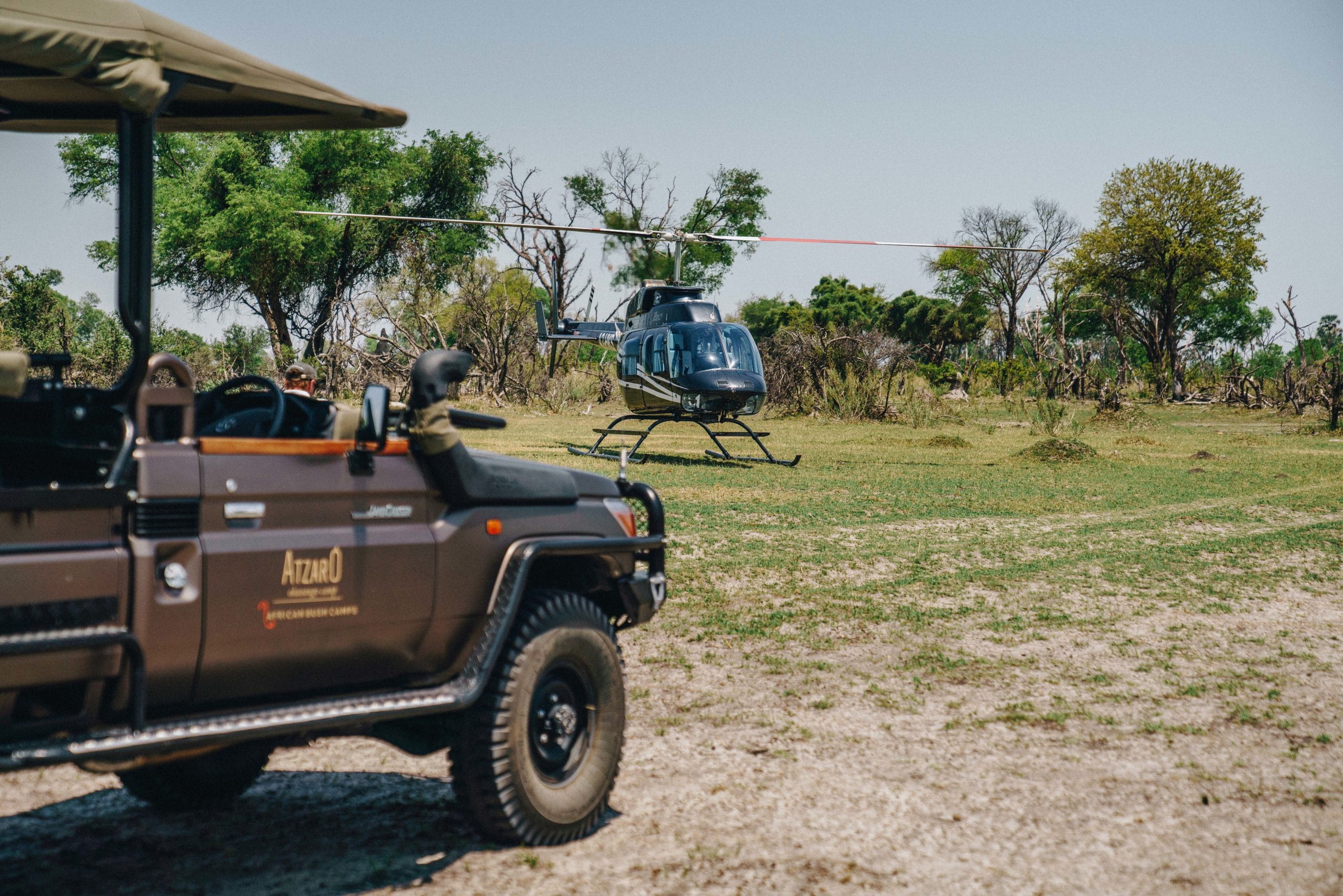
Transfers vary between operators and aircraft, so it is worth confirming your exact allowancebefore you pack. At Atzaró Okavango, the final leg is a 15-minute private helicopter flight from Maun, and the Safari Concierge team can advise on luggage for each part of the journey.
The good news is that you need far less than you think. Most camps in the Delta include a laundry service, and at Atzaró Okavango it is part of the suite amenities alongside a safe, a hair dryer, Healing Earth toiletries and a tea and espresso station. The camp also provides purified water in glass bottles, both in our suites and on activities, so there is no need to bring your own.
In practice, three to four days worth of clothing is enough for a week-long stay. The rest of the space is better saved for binoculars and a good camera.
What to Wear: How Do You Curate Your Bush Palette?
Sunrise to Sunset: Layering
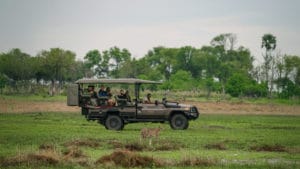
A day on safari covers a wide temperature range. Morning game drives start early, often before sunrise, in an open vehicle. In the Botswana winter, from roughly June to August, dawn temperatures in the Delta can drop to single digits Celsius, then climb past 25°C by midday.
Layering is the answer. A typical morning might begin with:
- A breathable base layer in cotton or merino wool
- A light fleece or fine-knit wool jumper
- A windproof jacket for the open vehicle
- A scarf, gloves and a warm hat on the coldest mornings
By mid-morning, most of that will be folded on the seat beside you. Underneath, light linen or cotton shirts and trousers keep you comfortable through the heat of the day. Long sleeves are useful at dawn and dusk, both for the cold and as protection against mosquitoes.
In the green season, from about November to March, days are warmer and more humid, with afternoon storms. A packable rain jacket earns its place in your bag during those months.
The Silent Palette: Earth Tones
On safari, colour is more than a matter of taste. Neutral, earthy tones help you blend into the landscape and draw less attention from wildlife, particularly on walking safaris and mokoro excursions, where you are closer to the animals and at eye level with them.
The palette is easy to remember: khaki, olive, taupe, sand and stone. A few colours are worth avoiding:
- White and bright neon shades stand out in the bush and show dust within minutes.
- Dark blue and black attract tsetse flies, which are drawn to these colours.
- Camouflage is associated with the military, and in several southern African countries its use is restricted to the armed forces. It is best left at home.
Evening Elegance
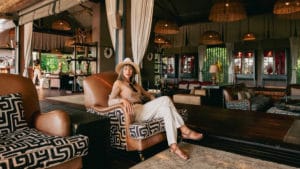
Evenings in camp are relaxed but considered. After the afternoon drive and sundowners, there istime to shower and change before drinks by the fire and dinner, often served under the stars in the Ancestral Boma or on the deck. The dining experience at Atzaró Okavango moves between the Boma, bush dinners and the Wine Cellar, so it helps to have something that feels a little dressed up.
Linen trousers with a crisp safari shirt, or a flowing maxi dress, work well. Temperatures drop quickly after sunset, so a cashmere wrap or a light knit is worth keeping close. Dress codes are informal; the aim is comfort that still feels like an occasion.
Essential Footwear: What Shoes Do You Need on Safari?
Trail-Ready to Lodge-Casual
Two or three pairs of shoes are enough for most safaris. For activities, choose a pair of closed-toe walking boots or trail runners that are already worn in. They need to be comfortable on sand, dry grass and uneven ground, and practical enough to keep out thorns. On a walking safari, quiet soles and neutral colours make a real difference.
“On foot, you stop looking for the big things and start noticing the small ones: a track from last night, a dung beetle, the smell of wild sage. The Delta tells you a lot more when you slow down.” — Max, Safari Guide, Atzaró Okavango
In camp, something lighter takes over: loafers, espadrilles or leather sandals for the decks, the pool and dinner. Flip-flops are handy for the outdoor shower, but they are not suitable for activities.
Gear & Technology Checklist: What Equipment Should You Bring?
Binoculars
If there is one piece of equipment worth investing in, it is a good pair of binoculars. Having your own means you never have to wait to see what the guide is pointing at, whether it is a leopard in a sausage tree or a fish eagle on a dead branch.
Look for 8×42 or 10×42 models. The 8× magnification offers a wider, steadier view that is easier for birding and for use in a moving vehicle, while 10× brings distant animals closer. High-end optics from brands such as Leica or Swarovski are noticeably brighter at dawn and dusk, when much of the action happens. With over 400 bird species recorded in the Delta, you will use them more than you expect.
Sun & Dust Accessories
The African sun is strong year-round, and open vehicles offer little shade. Pack:
- A wide-brimmed hat with a chin strap, so it stays on while the vehicle moves Polarised sunglasses to cut glare from water and pale sand
- A light silk or linen neck buff that can be pulled up against dust or sun High-SPF sunscreen and lip balm
- Insect repellent for dawn and dusk
The Okavango Delta is in a malaria area, so speak to your doctor or a travel clinic about preventionwell before you travel.
Power & Tech
Botswana uses Type G and Type M sockets, and some properties also have Type D. A universal adaptor covers all three. Beyond that, bring:
- A power bank to keep your phone and camera charged during long drives Spare camera batteries and extra SD cards, as the Delta tends to fill them faster than planned
- A small, soft camera bag that fits within your luggage allowance
- A dust cover or a simple zip bag to protect equipment on dusty tracks
Atzaró Okavango runs entirely on solar power, and the suites have Wi-Fi, so you can charge devices and share a few photos in the evening. Many guests find they use their phones far less than they expected.
Specialized Safaris: How Should You Pack for Different Safari Styles?
Water Safaris vs. Rainforest Trekking
Not every safari is spent in a vehicle, and the right gear depends on the kind of journey you are planning.
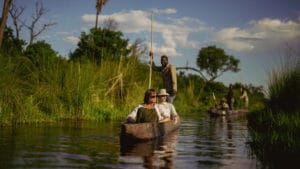
- Water safaris are central to the Okavango experience. On a mokoro, a traditional dugout canoe poled through the channels, you sit low to the water in silence. Quick drying trousers, a hat that will not blow away and a small dry bag for your phone and camera are all useful. Neutral colours matter even more here, as you glide past animals at close range. You can see the full range of our safari experiences, from mokoro and walking safaris to helicopter flights over the Delta.
- Rainforest trekking, such as gorilla or chimpanzee treks in Rwanda or Uganda, is an entirely different kind of trip, and some travellers combine it with a Botswana safari. It calls for waterproof hiking boots with good grip, long trousers that can be tucked into socks, gardening gloves for handling vegetation, a rain jacket and gaiters. If you are combining both in one journey, pack the trekking gear in a separate soft bag and check the luggage allowance for each flight.
Frequently Asked Questions
How much luggage can I bring on a Botswana safari?
Most light-aircraft transfers in Botswana allow around 15 kg (33 lb) per person, including hand luggage and camera gear, in a soft-sided bag without wheels or a rigid frame. Allowances vary by operator, so confirm yours before travelling. Some operators can arrange to store or fly extra luggage separately if you ask in advance.
What colours should I avoid on safari?
Avoid white and bright neon colours, which stand out in the bush, and dark blue or black, which attract tsetse flies. Camouflage is associated with the military and is restricted in several southern African countries, so it is best left at home.
Do I need to bring formal clothes for a luxury safari?
No. Evenings are relaxed, and there is no formal dress code. Linen trousers, a smart shirt or a maxi dress, plus a warm layer for after sunset, are more than enough.
Is laundry available at safari lodges?
Most lodges in the Okavango Delta offer a laundry service, which is why a few days’ worth of clothing is enough for a longer stay. At Atzaró Okavango, laundry is part of the suite amenities.
What should a safari packing list for women include?
Focus on breathable layers in neutral tones, a supportive sports bra for bumpy game drives, a wide-brimmed hat, one or two dresses or linen sets for the evening, and a warm wrap. A small crossbody bag is useful for keeping essentials close during activities.
When should I plan my safari packing list?
Start around a month before travel. That leaves time to wear in new walking shoes, arrange malaria advice and confirm your luggage allowance for each flight. Our Safari Concierge team can help you plan your trip, from flights and transfers to what to expect on the ground.
The best safari wardrobes are rarely the biggest. A few well-chosen layers, colours that belong to the landscape and one good pair of binoculars will carry you further than a full suitcase ever could.
What you leave behind makes room for what matters: the dawn cold on an open vehicle, the quiet of a mokoro, a long evening by the fire. Pack lightly, and the Delta will fill in the rest.
Ready to experience the Delta?


